Introduction
The restaurant industry is becoming increasingly digital. Customers expect fast service, clear communication, and visually engaging experiences when ordering food.
Traditional printed menus can be difficult to update and often fail to capture customer attention. Digital menu boards provide restaurants with a modern solution that enables real-time updates, improved customer engagement, and greater operational flexibility.
What Are Digital Menu Boards?
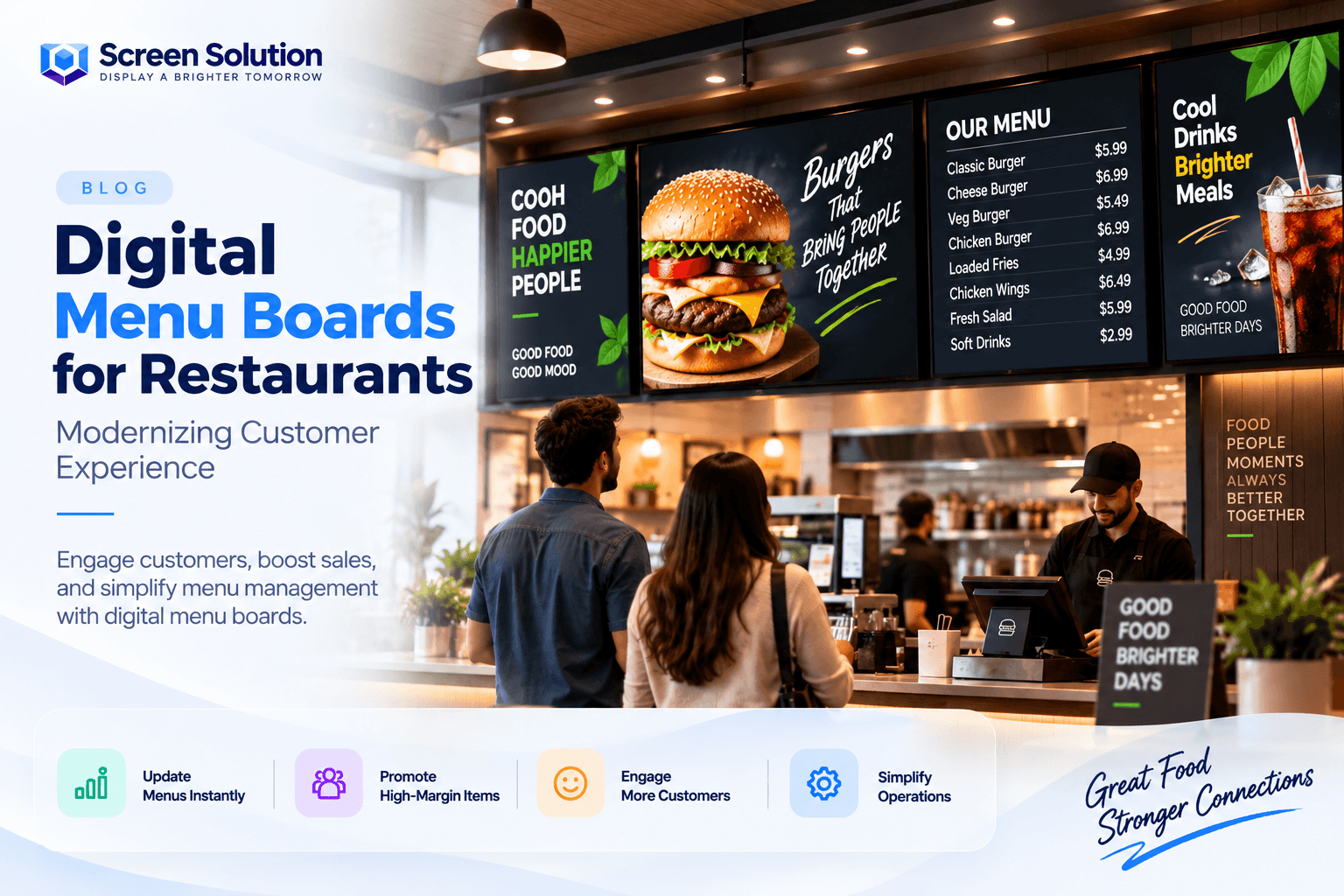
Digital menu boards are display screens that replace traditional printed menus. They allow restaurants to showcase menu items, pricing, promotions, and branded content using dynamic digital displays.
Content can be managed remotely through a centralized content management system (CMS), making updates quick and efficient.
Why Restaurants Are Switching to Digital Menu Boards
Restaurants need the ability to adapt quickly to changing customer demands and business requirements.
Digital menu boards help by providing:
Instant menu updates
Better visual presentation
Centralized management
Improved customer experience
Reduced printing costs
Key Benefits
Real-Time Menu Updates
Menu items, prices, and promotions can be updated instantly without reprinting materials.
Enhanced Customer Experience
High-quality visuals and animations make menus more engaging and easier to understand.
Promotion of High-Margin Items
Restaurants can strategically highlight products that generate higher profits.
Consistent Branding
Every location can display the same approved content and promotional campaigns.
Reduced Operational Costs
Eliminates recurring costs associated with printed menus and signage.
Common Applications
Quick Service Restaurants (QSR)
Display combo meals, promotions, and limited-time offers.
Cafés
Show coffee selections, bakery items, and seasonal beverages.
Food Courts
Promote menu options while helping customers make faster decisions.
Fine Dining
Present premium menu offerings and brand messaging.
Hotel Restaurants
Communicate daily specials and event information.
Managing Multiple Restaurant Locations
Restaurant chains often operate across multiple cities and regions.
A centralized CMS enables teams to:
Update all locations simultaneously
Schedule promotions
Manage regional pricing
Monitor display performance
Maintain brand consistency
The Role of Android Signage Players
Android signage players provide reliable content playback and remote management capabilities.
Key advantages include:
Stable operation
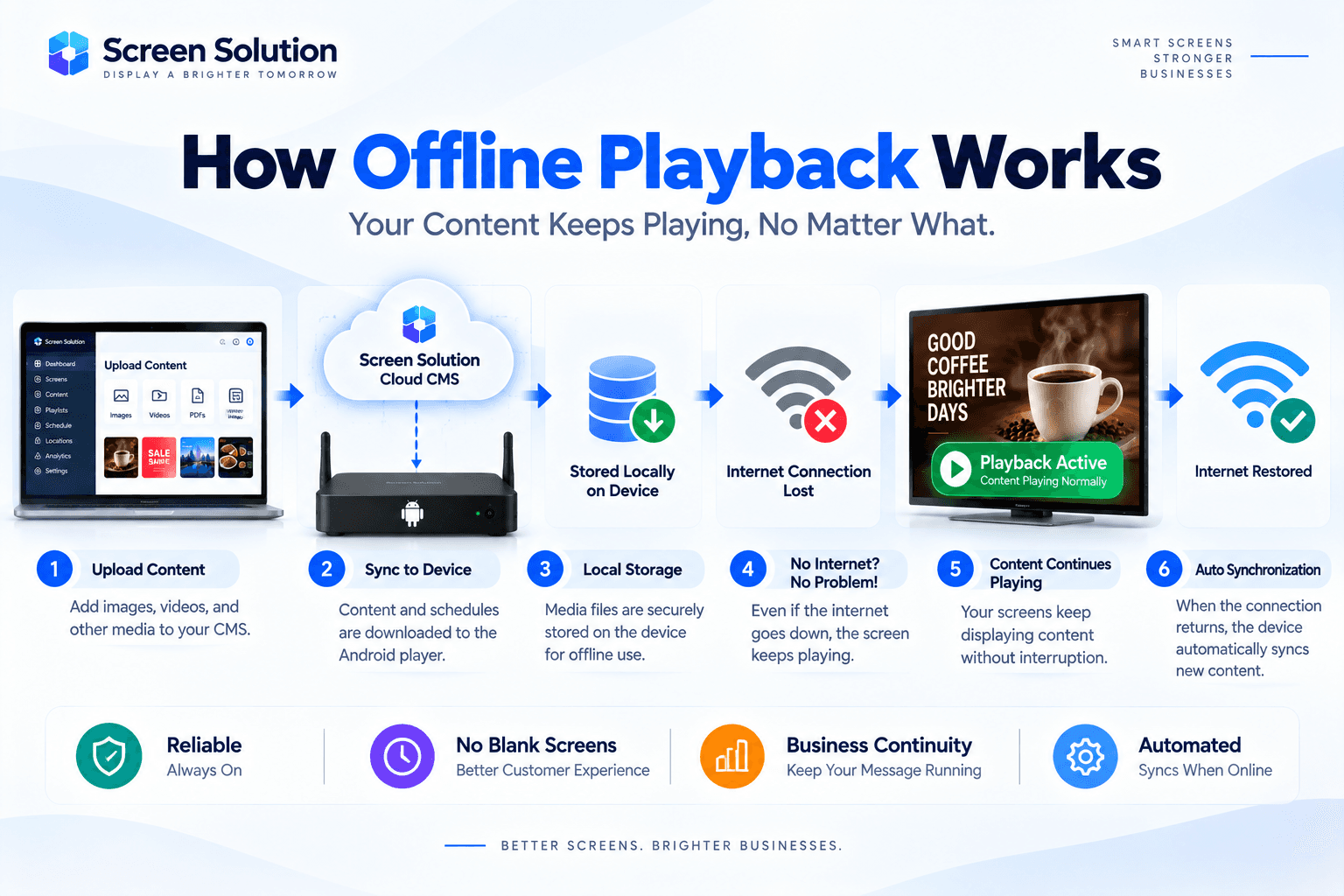
Offline playback
Remote monitoring
Automatic synchronization
Scalable deployment
These features make Android-based solutions ideal for restaurant environments.
Best Practices
To maximize effectiveness:
Use high-quality food photography.
Keep menu layouts simple and readable.
Highlight best-selling items.
Schedule promotions based on meal times.
Regularly update seasonal offerings.
Future of Restaurant Digital Signage
Restaurants are increasingly adopting:
AI-driven recommendations
Interactive ordering displays
Personalized promotions
Cloud-based content management
Real-time analytics
Digital menu boards will continue playing a key role in modern restaurant operations.
Conclusion
Digital menu boards provide restaurants with a powerful tool for improving customer experience, increasing operational efficiency, and driving sales. By combining dynamic content, centralized management, and reliable playback technology, restaurants can modernize communication and create more engaging dining experiences.
For businesses looking to enhance customer engagement and streamline menu management, digital menu boards offer a scalable and future-ready solution.